Research briefing. This page summarises a scientific Perspective article and a Chinese-language interpretation of it. It is not a clinical guideline, not a treatment offered by JianJia Rehabilitation, and not a reason to start, stop or change any medicine. Human evidence in this field is still preliminary.
GLP-1 receptor agonists are already established in diabetes and obesity care. A growing body of evidence now suggests they may also reduce craving and substance use. A Perspective from a US National Institute on Drug Abuse team published in Science uses this observation to propose a broader frame: addiction may need to be understood and treated as a whole-body condition, not only as a disorder of the brain's reward circuitry.
What the Perspective proposes
Rather than attributing the effect of GLP-1 drugs on addiction to dopamine signalling alone, the authors argue that brain, metabolic, inflammatory, endocrine and cardiovascular systems interact to drive and maintain substance use. They call this a whole-person health framework.
Beyond the reward circuit
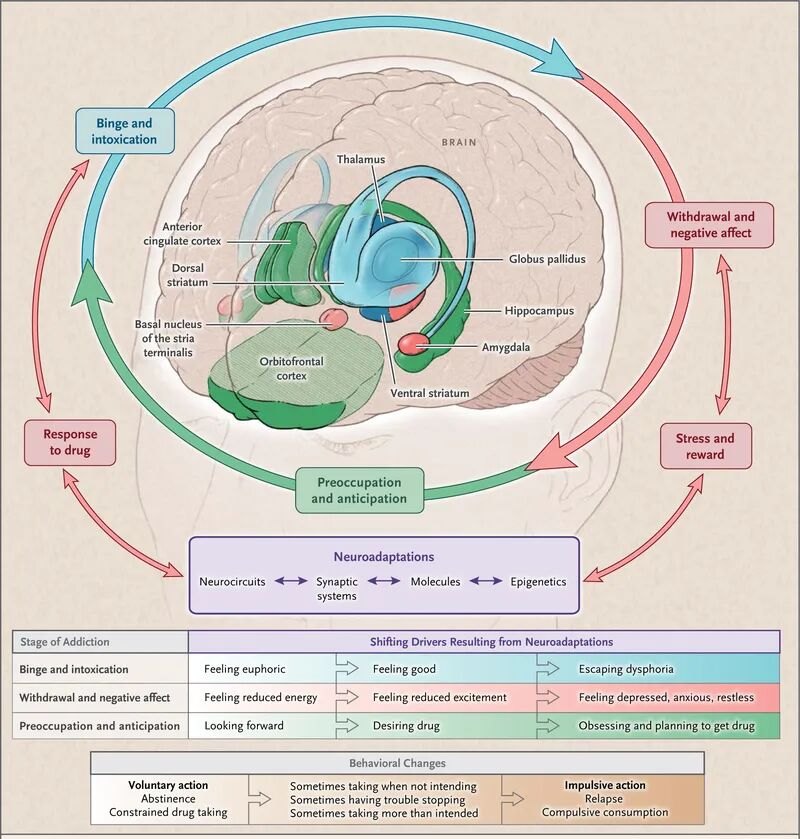
Chronic substance use affects stress sensitivity, executive control and whole-body physiology. Metabolic and inflammatory states can themselves increase craving and relapse risk.
Selective dopamine effect
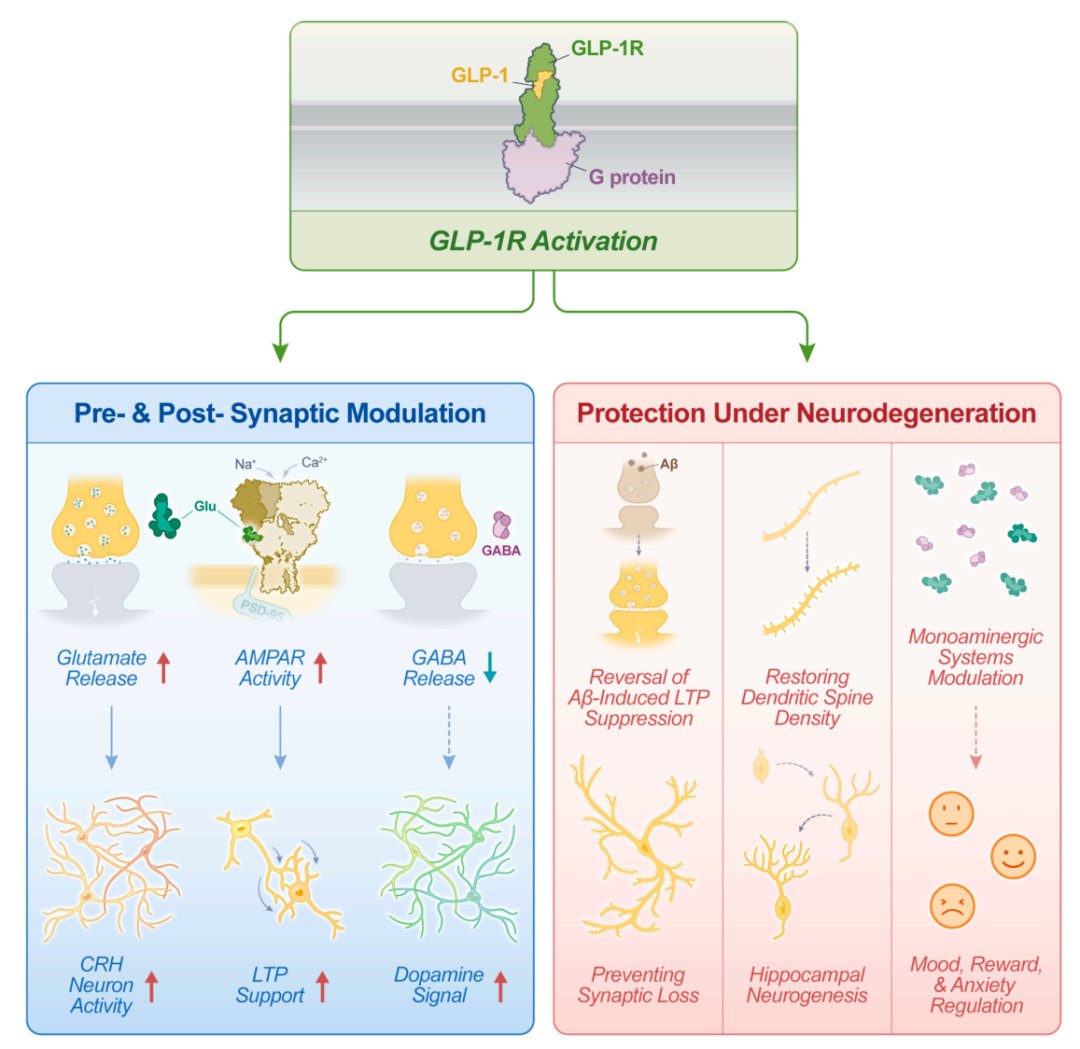
Animal work suggests GLP-1 agonists blunt drug-induced dopamine surges while preserving the tonic dopamine signalling needed for normal movement and motivation.
Comorbidity in one view
Many people with substance use disorders also live with obesity, diabetes or cardiovascular disease. A single agent that addresses both would be clinically useful if efficacy is confirmed.
The gut-brain axis as a coordinating system
GLP-1 is secreted by intestinal L cells and acts on gastric emptying, insulin release and inflammation. Signals reach the brain through vagal afferents, circulating hormones, inflammatory mediators and circumventricular organs. GLP-1 is also produced within the brainstem, and receptors are found in the hypothalamus, habenula, limbic structures and GABA neurons that regulate dopamine.
In plain terms, the article suggests that treating addiction only as a fault in a central "control room" may be too narrow. Peripheral metabolic and inflammatory signals are part of the loop, and improving them may in turn reduce the biological pressure to seek drugs.
How strong is the evidence
The Perspective is a synthesis, not a new experiment. It draws on four kinds of published work, and the authors are explicit that the human evidence is early.
| Evidence tier | What has been observed | Main limitation |
|---|---|---|
| Animal models | Reduced drug self-administration, blunted dopamine surges and less cue-induced reinstatement in rodents. | Animal behaviour does not predict clinical benefit in people. |
| Real-world data | Retrospective electronic health records and case reports suggest lower craving and use of alcohol, nicotine, opioids and stimulants. | Confounding by indication, weight change and healthcare contact. |
| Small clinical studies | Reduced heavy drinking in people with alcohol use disorder in a randomised trial; reduced smoking also observed. | Small samples, short follow-up, selected populations. |
| Ongoing trials | Randomised trials of GLP-1 drugs alone or combined with existing addiction medicines are planned or under way. | No results yet; no approved addiction indication. |
Safety questions that remain open
The source article explicitly states that GLP-1 receptor agonists are not established clinical treatment for substance use disorders. Appetite suppression can harm people with eating disorders or malnutrition, and cases of Wernicke encephalopathy have been reported in people with alcohol use disorder and thiamine deficiency.
Other unresolved questions include whether benefits are limited to people with metabolic abnormalities, what happens after the drug is stopped, whether combining it with buprenorphine or methadone adds gastrointestinal risk, and how it affects adolescents, older adults and pregnant or breastfeeding women. Long-term maintenance strategies have not been defined.
Why rehabilitation teams should follow this
If the framework holds up, addiction care would need systematic screening for metabolic, inflammatory and endocrine comorbidity — with physical health treated as part of recovery rather than a separate issue. It also points toward integrating addiction treatment into primary care, where GLP-1 medicines are already familiar, and toward reducing the stigma attached to a biologically treatable condition. These are possibilities, not established practice.
Key takeaways
- The Science Perspective proposes a whole-person, brain-body framework for understanding and treating addiction.
- Animal and early human signals are promising; randomised evidence in people remains limited.
- Specific safety risks and large evidence gaps in special populations are explicitly acknowledged.
- No GLP-1 medicine is approved for addiction treatment; this is research context, not a prescription.
Source and editorial note
Independently written in English by the MedTourChina Rehabilitation editorial team, based on the Science Perspective "GLP-1 receptor agonists in addiction therapy" (DOI: 10.1126/science.aej9836) and a Chinese-language academic interpretation published by 智慧见识 on 11 November 2026. Diagrams are reproduced from that interpretation with attribution; rights remain with the original holders. This page is academic information and does not constitute clinical advice, diagnosis or treatment.