
Industry briefing. This page describes a device developed by a Chinese medical-technology company and a procedure performed at another hospital. It is not a service offered by JianJia Rehabilitation, not a referral, and not a treatment recommendation. Figures below are company-reported and have not been independently verified by us.
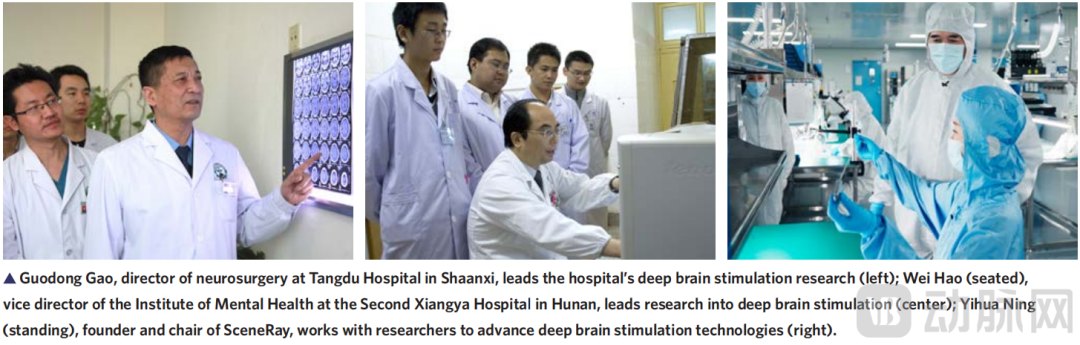
In June 2026, a Chinese-developed implantable deep brain stimulation (DBS) system for opioid addiction drew international attention. According to a Chinese industry report, the first commercial implant of the dual-target Neurestora system was performed on 25 June 2026 at the Ganjiang New Area Hospital of the First Affiliated Hospital of Nanchang University, one week after a Nature partner-content feature covered the technology.
We have summarised the report for an international readership because neuromodulation is increasingly relevant to neurorehabilitation. This is an independent English briefing, not a translation or a republication of the original article.
A fourteen-year development timeline
The report describes a long evidence chain rather than a single breakthrough. Dates and outcomes below are as stated by the company and the original report.
| Year | Milestone | Why it mattered |
|---|---|---|
| 2012 | A dual-target DBS approach for addiction was proposed with a team at Tangdu Hospital. | Shifted the concept from single-target stimulation to coordinated network modulation. |
| 2014 | Eight early exploratory cases were completed. | First reported clinical signal; too small to draw firm conclusions. |
| 2017–2018 | The device entered China's innovative-device review pathway, received an FDA breakthrough-device designation, and a GCP trial began. | Moved from case experience into formal regulated clinical evaluation. |
| 2021 | An independent expert group reviewed early implanted participants. | Introduced external assessment of follow-up outcomes. |
| December 2025 | Chinese regulatory approval was granted for the addiction indication. | The indication became available under a registered device in China. |
| June 2026 | A Nature partner-content feature appeared on 18 June; the first commercial implant was reported on 25 June. | Marked the transition from clinical study to commercial use. |
Why two targets
The underlying model treats addiction as a chronic relapsing brain disorder involving two interacting circuits. The reward circuit drives withdrawal discomfort and drug seeking after repeated dopamine surges; the memory circuit links people, places and objects to craving long after physical detoxification.
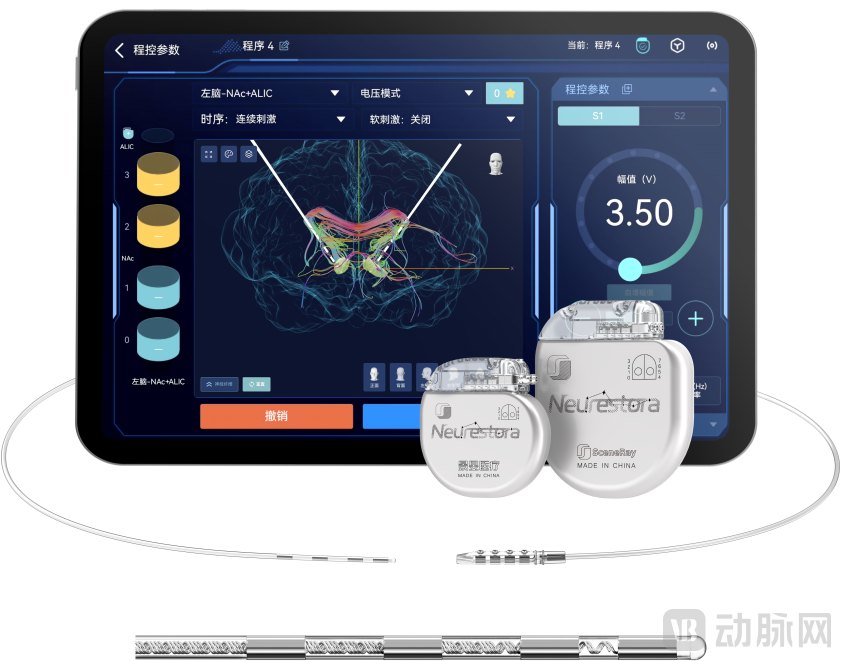
The system therefore stimulates the nucleus accumbens and the anterior limb of the internal capsule through one electrode, with a dual-channel chip delivering different stimulation parameters to each region. The stated aims are rapid relief of withdrawal discomfort and gradual weakening of addiction-related memory, together with remote parameter adjustment and long-term follow-up.
How to read the claims
The report quotes a six-month abstinence rate of 80 percent, long-term abstinence in roughly 70 percent of patients, and device removal in some patients after two years. These figures come from the company's own study presentations and interviews; we have not seen the full trial protocol or a peer-reviewed publication of the complete dataset, and the sample sizes described are small.
The Nature item should also be read carefully: the visual material identifies it as partner content produced by Nature Custom Media, with a disclaimer that Nature takes no responsibility for the content. It is not an independent news report and not a peer-reviewed original research paper.
An implanted neuromodulation device is a major medical decision with surgical risks. It is available only through appropriately licensed centres and a formal indication assessment. Do not travel for an implant based on a news summary.
Why this matters for rehabilitation
For rehabilitation professionals, the notable point is the direction of travel: technologies that read or modulate neural signals are moving from research into regulated clinical pathways, in parallel with non-invasive BCI training systems used in neurological rehabilitation. Both require the same discipline — careful patient selection, documented outcomes, and long-term follow-up rather than headline numbers.
Key takeaways
- A Chinese dual-target DBS system received regulatory approval for an addiction indication in December 2025, with a first commercial implant reported in June 2026.
- The dual-target design addresses both reward and memory circuits, rather than a single brain nucleus.
- Efficacy figures are company-reported, based on small cohorts, and have not been independently verified here.
- The Nature feature was partner content, not an independent research paper.
Source and editorial note
Independently written in English by the MedTourChina Rehabilitation editorial team from a Chinese-language feature published by 动脉网 (VCBeat) on 26 June 2026 and its cited references. The original publisher states that its content is protected and may not be reproduced; this page is a summary with attribution, not a translation or republication. See also the 2025 World Drug Report, Nature Medicine burden-of-disease analyses and the company interview cited in the original article. This page is industry information only and is not medical advice.