Hospital news. This article reports on an exhibition appearance by Beijing JianJia Rehabilitation Hospital, part of the JianJia Rehabilitation network. It describes technology already in clinical use at that hospital; availability at other JianJia sites may differ. Please contact us before planning a visit.
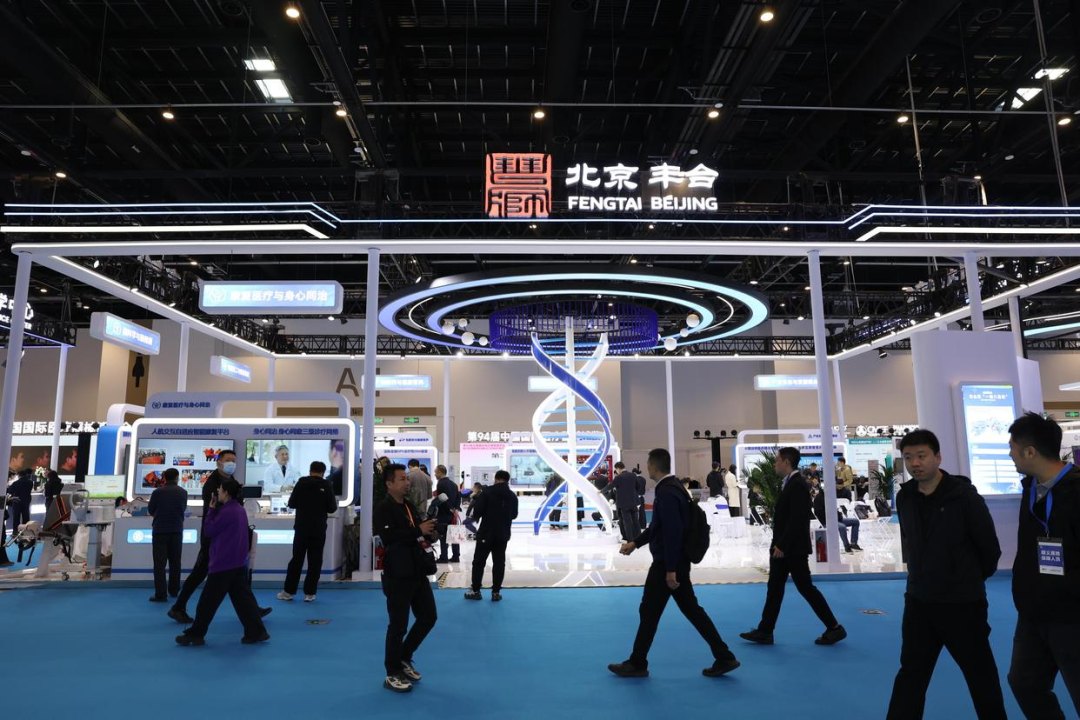
Once confined to science fiction, "mind control" has become a working tool in rehabilitation clinics. From 21 to 24 October 2026, Beijing JianJia Rehabilitation Hospital presented its brain-computer interface (BCI) systems at the Reed Sinopharm Exhibitions in Beijing, showing how movement intention can be translated into assisted movement for people recovering from neurological injury.
The hospital was invited by the Fengtai District healthcare industry task force to join the district's showcase under the theme "BCI application scenarios in neuromodulation and critical-care rehabilitation systems".
What was on the stand
Two systems that are already used with patients were demonstrated live, rather than shown as prototypes.
Hand function BCI system
A brain-computer interface for hand-function training and assessment. It reads the intention to open, close or grasp the hand and couples that intention with the corresponding movement and evaluation.
Upper and lower limb BCI system
An active-passive training system for the arms and legs. It supports stepping and reaching practice even when voluntary movement is weak or inconsistent.
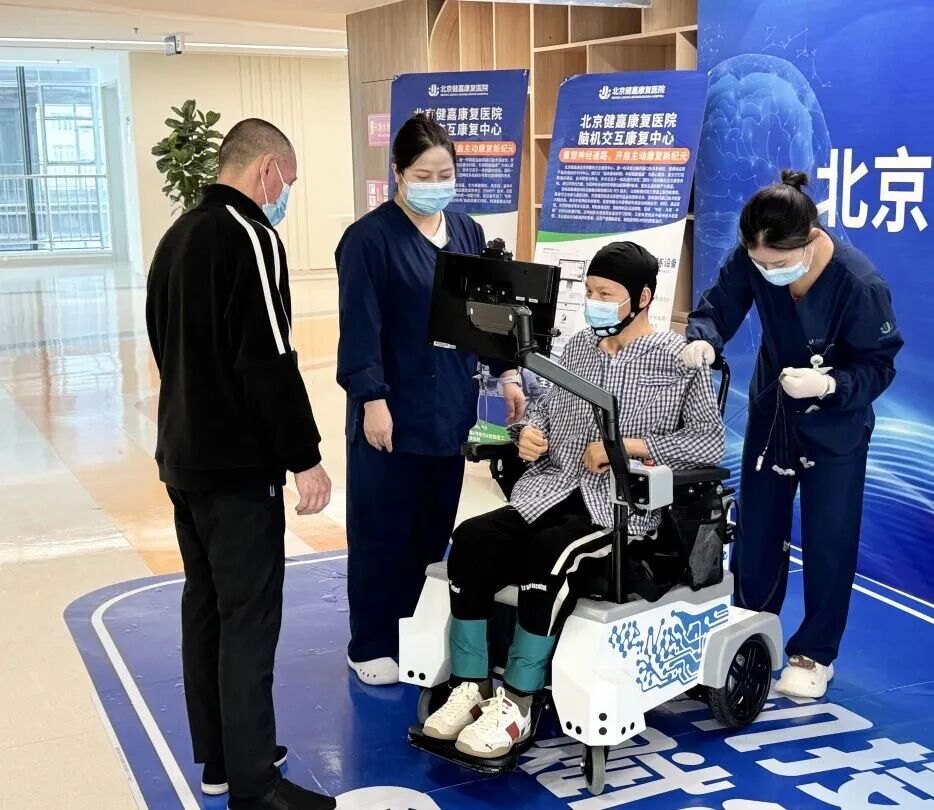
BCI-controlled wheelchair
A wheelchair driven by brain-computer interface signals, demonstrated by a patient of the hospital. It shows how the same signal decoding can support mobility outside a training session.
How intention-driven training works
The systems capture and decode the brain's motor intention signals — the thought of lifting a hand, grasping an object or raising a leg — and convert them into device actions that move the limb. Sensory feedback from that movement returns to the brain, closing the loop between intention, execution and perception.
That loop is the point. Conventional passive rehabilitation moves a limb for the patient; BCI training asks the patient to initiate the movement and then rewards the attempt with real movement and real sensation. Repeated over many sessions, this is intended to support neural pathway reorganisation after stroke or brain injury, and to make active rehabilitation possible earlier in recovery.
Why the clinical setting matters
Functional reconstruction after neurological injury and critical illness is among the hardest problems in rehabilitation medicine. Patients may be unable to produce enough voluntary movement to take part in conventional active training, yet passive movement alone does not engage the motor system in the same way.
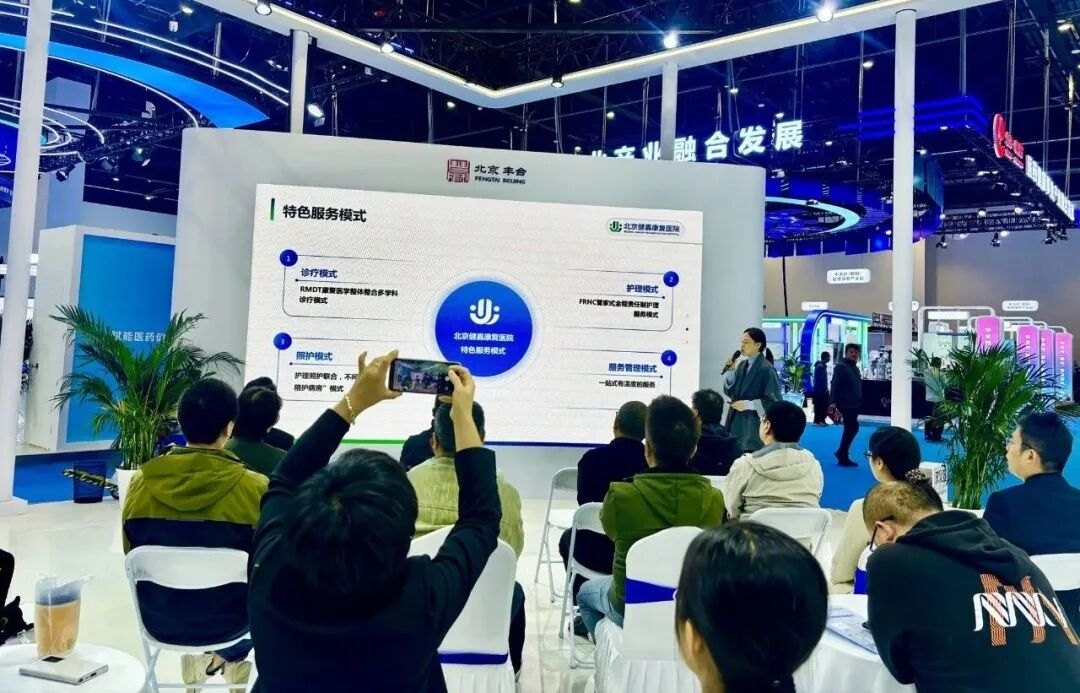
By decoding intention instead of requiring full movement, BCI systems give these patients a way to participate in active training. Hospital staff demonstrated both systems to Fengtai district officials and to Chinese and international colleagues, and discussed how medical-engineering collaboration can move research technology into everyday clinical service.
What comes next
Beijing JianJia Rehabilitation Hospital states that it will continue to develop neurological, critical-care and sports rehabilitation, work with universities and research institutes, and take part in the regional medical-engineering innovation ecosystem. The stated goal is to translate frontier research into rehabilitation services that patients can actually access.
Key takeaways
- Two BCI rehabilitation systems and a BCI-controlled wheelchair were demonstrated as systems already in clinical use, not laboratory concepts.
- The mechanism is a closed loop of movement intention, device-assisted execution and sensory feedback.
- The main clinical value is enabling active training for patients after stroke or brain injury who cannot yet move reliably on their own.
- These technologies require individual assessment; a demonstration at an exhibition is not a treatment recommendation.
Source and editorial note
Adapted and translated by the MedTourChina Rehabilitation editorial team from an article published by the JianJia Rehabilitation official account on 11 November 2026. Photographs are credited to JianJia Rehabilitation. This page is general information about rehabilitation technology and is not medical advice, a diagnosis or a treatment recommendation. Suitability for any individual patient must be assessed by qualified clinicians.